
Five WMS designed for retail eCommerce companies
If you've ever seen an eCommerce business owner with missing patches of hair, there's a good chance their warehouse management system doesn't talk to their order channels. Few things are more frustrating (or more costly) than incorrect picks, late shipments, wrong orders, and boxes that never leave the building.
A good WMS fixes all of that by automating the process and creating records that are easy to audit. Sounds great, right?
Below, we've pulled together five eCommerce WMS platforms built to work across your distribution channels and online stores, whether you're selling on Amazon, Shopify, or a custom specialty site.
1. Finale Inventory
Finale Inventory earns its place here for its consistently strong reviews across multiple trusted sites and solid core functionality.
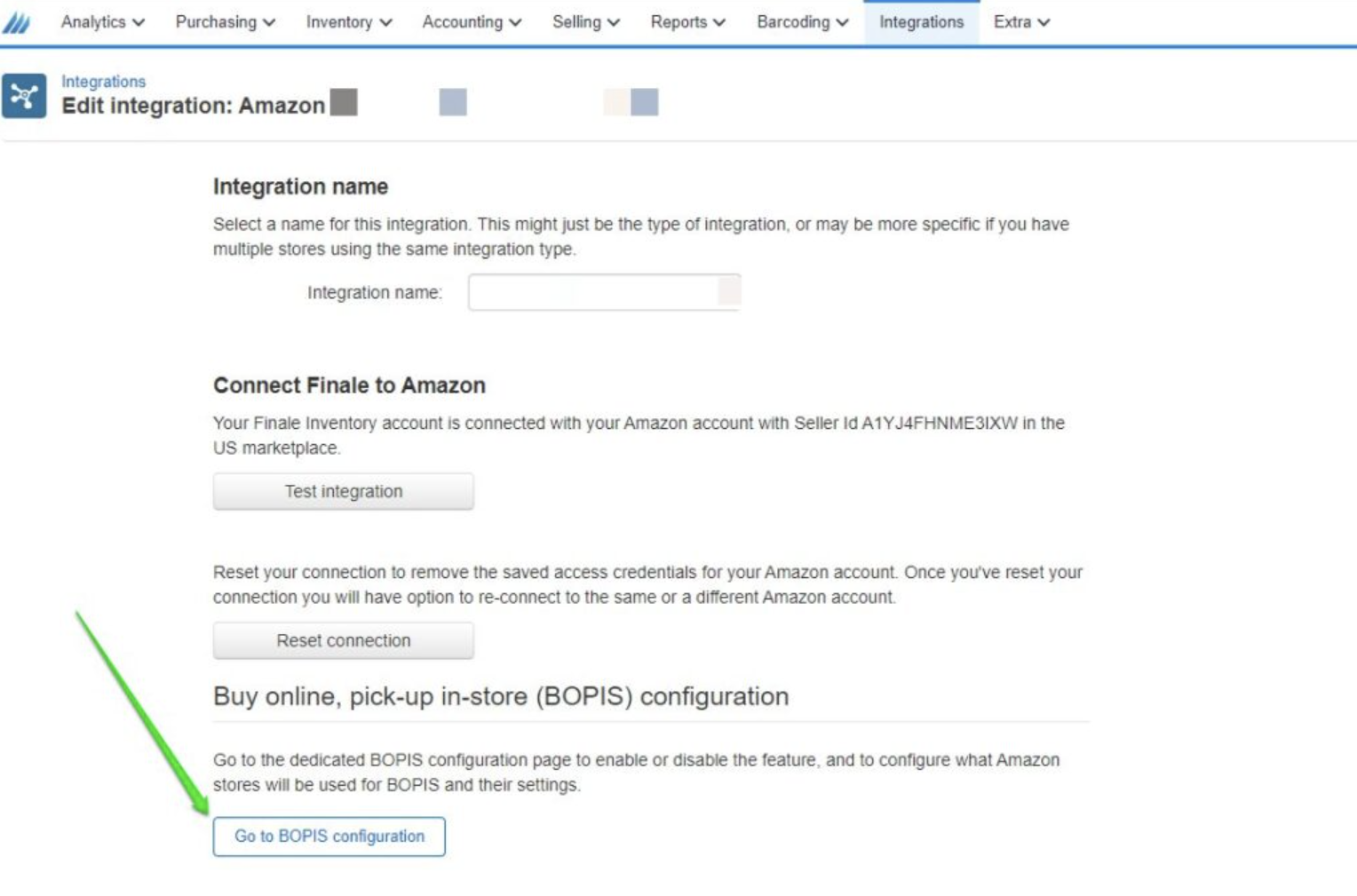
eCommerce brands and retailers will appreciate the channel depth, with more than 20 integrations covering the biggest platforms as well as specialty options like PrestaShop, Newegg, and Rakuten.
The reporting tools aren’t as robust as some of the others on this list, but the fundamentals are reliable on top of the integration: smart pricing, and a cloud-based setup that works well across multiple devices.
2. OrderFlow
OrderFlow is a UK-based WMS built specifically for high-volume, multi-channel eCommerce operations. Rather than selling you software and stepping back, OrderFlow operates more like a managed service where clients have direct access to the development team, and many have stayed with the platform for over a decade.
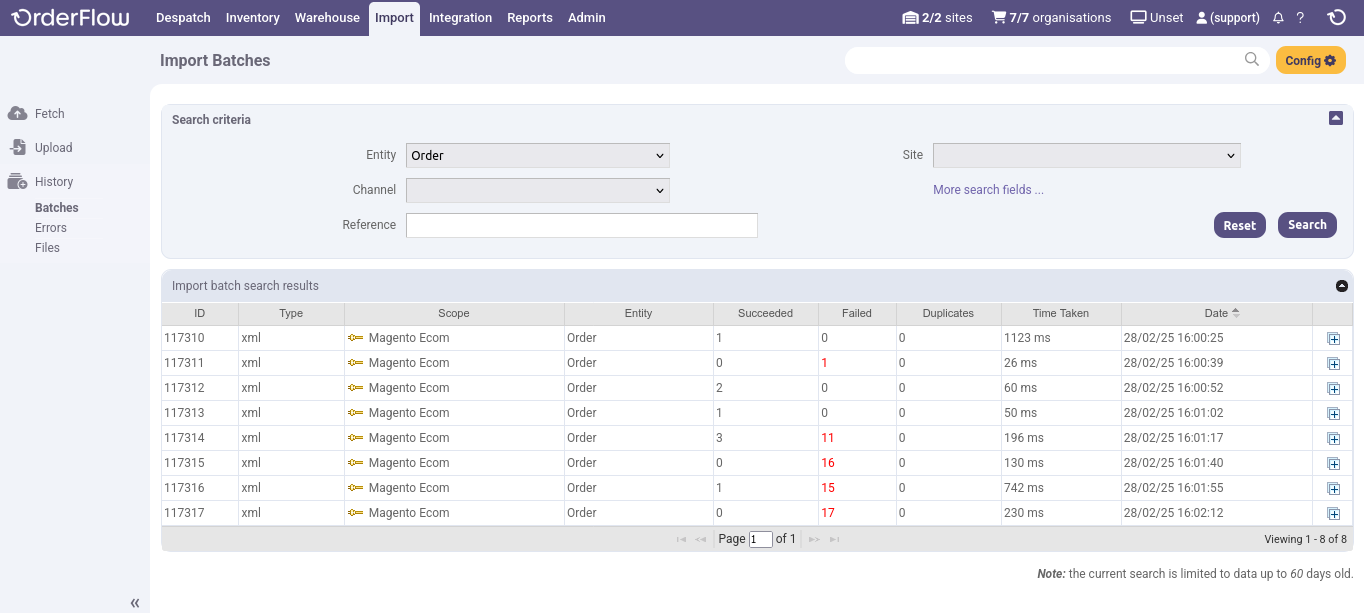
The platform covers the full picking and packing workflow, returns management, lot tracking, and integrations with Shopify and Magento. Its hybrid warehousing capability handles both small B2C parcel despatch and bulk pallet fulfillment, making it ideal for retailers who operate across both models.
The onboarding starts with a scoping exercise at your premises, which is unusual and worth noting: the system gets tuned to your processes rather than the other way around. If you're outgrowing a lighter WMS and want something that can scale and adapt with you, OrderFlow is worth a close look.
3. Veeqo
Veeqo, now an Amazon company, is a multichannel inventory and shipping platform aimed squarely at eCommerce retailers (and free to use for most sellers), which makes it a surprisingly accessible option given the depth of what it offers.
Real-time multichannel order management, automated inventory updates across Amazon, eBay, Shopify, and Etsy, and demand forecasting through a unified dashboard all come as standard.
Recommended download: Get your free WMS demo guide and vendor scorecard
Veeqo's warehouse scanner draws on the same technology used inside Amazon's fulfillment centres, which matters if you're processing a high volume of orders and accuracy is a priority.
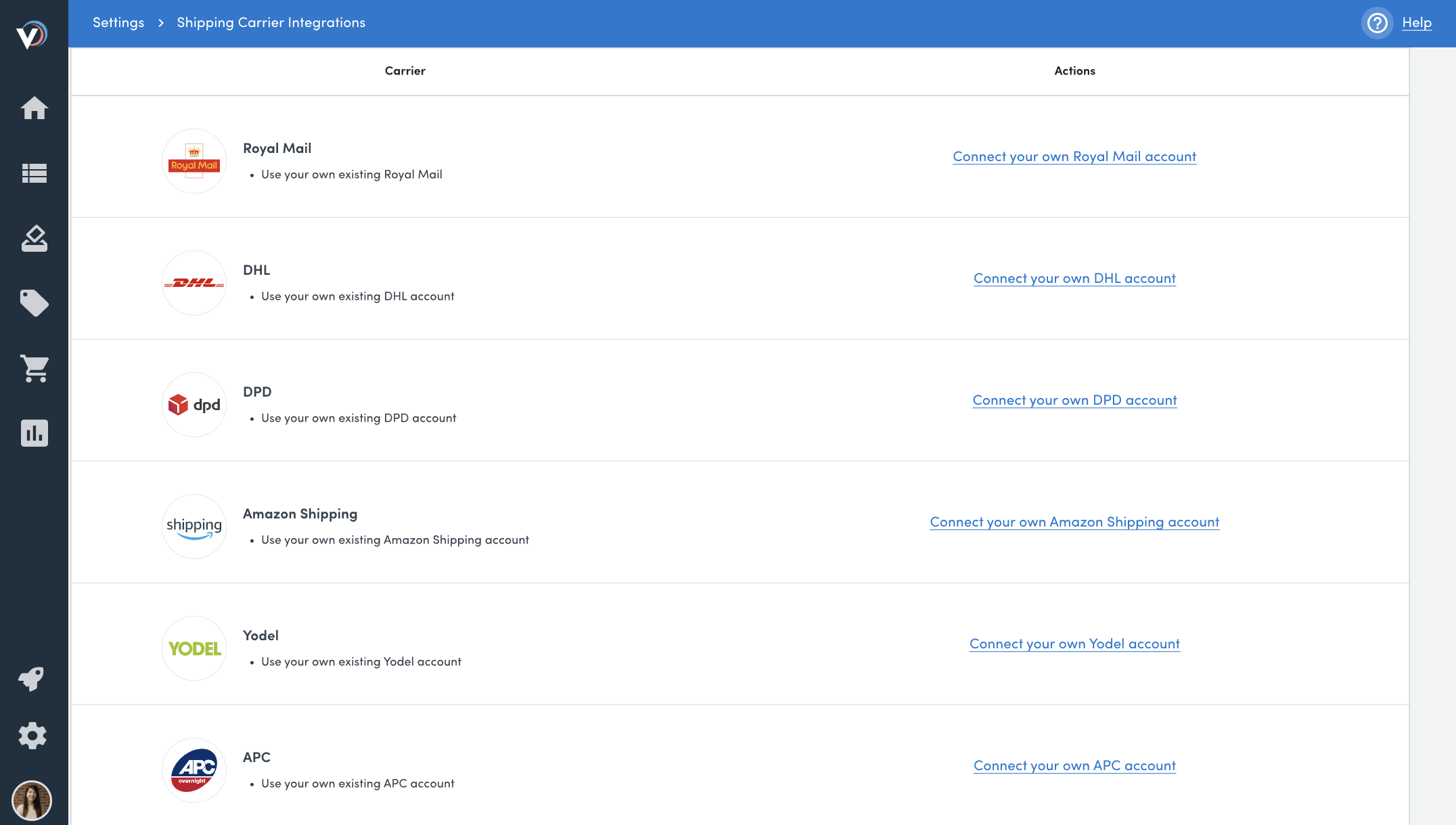
Where it particularly stands out is the shipping layer. With 50+ carrier and marketplace integrations and built-in access to Amazon Shipping rates, it removes much of the manual overhead that slows daily despatch.
The caveat worth flagging: if you need complex multi-location warehouse logic or extensive customisation, you may reach its limits faster than some of the enterprise-tier options on this list.
4. Fishbowl (Warehouse and Advanced)
Fishbowl is one of the most consistently recommended WMS platforms among eCommerce businesses, often by word of mouth from one store owner to another. Its part tracking and asset management tools are a particular strength: the system maps components across your warehouse and triggers automatic restocking when levels drop.
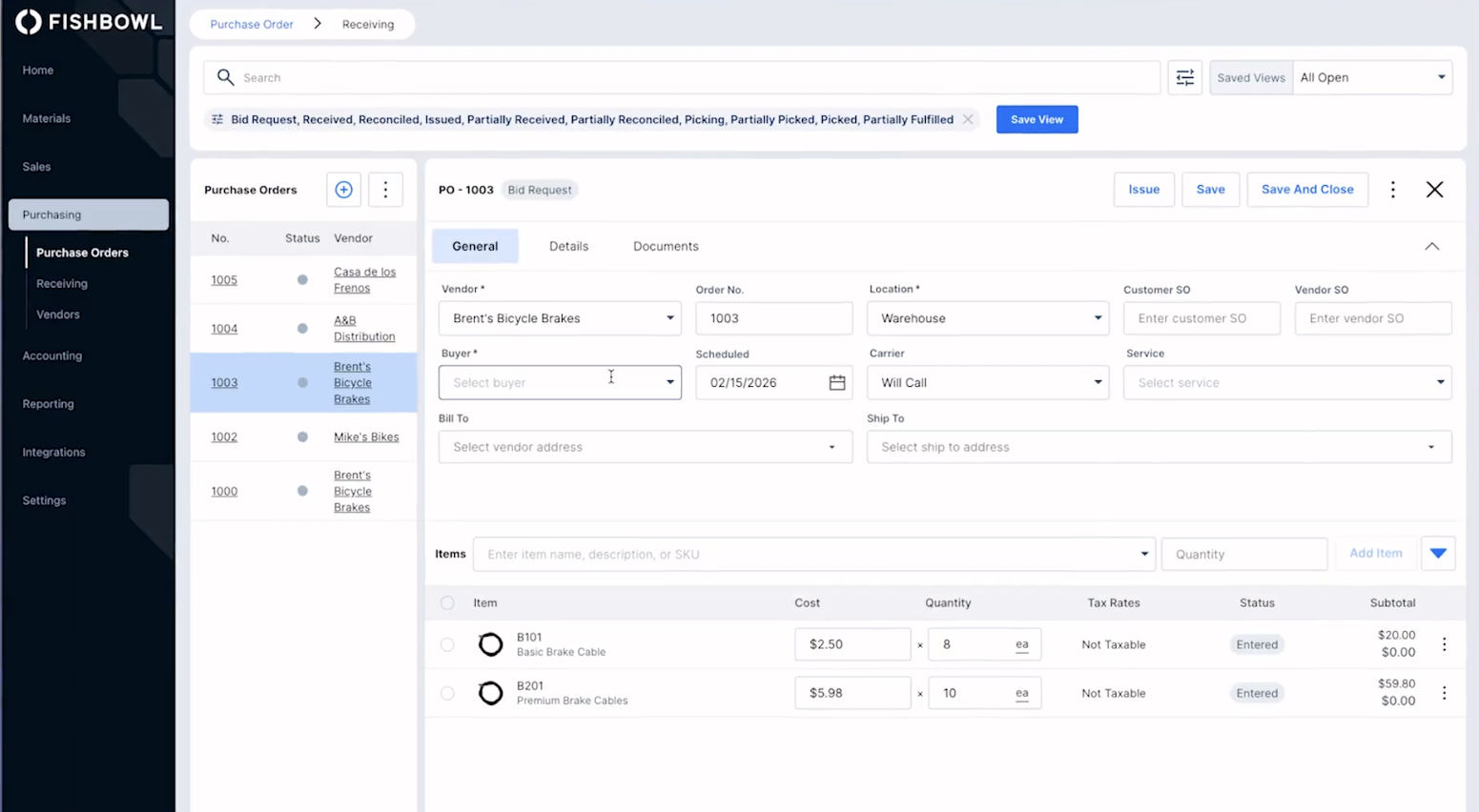
The QuickBooks and Xero integrations are among Fishbowl's most practical selling points, automating a lot of the financial reconciliation that ecommerce brands would otherwise handle manually. The integration list extends to Amazon, eBay, Shopify, and a range of shopping cart services.
Robust reporting and vendor management tools make it a strong eCommerce partner, though it is more expensive than others on the list.
5. Vin eRetail WMS
Vin eRetail WMS from Vinculum focuses on fulfillment across both B2B and B2C channels, with practical support for multi-client inventory segregation, multi-location operations, and multiple currencies (useful if you run a distributed operation or sell internationally).
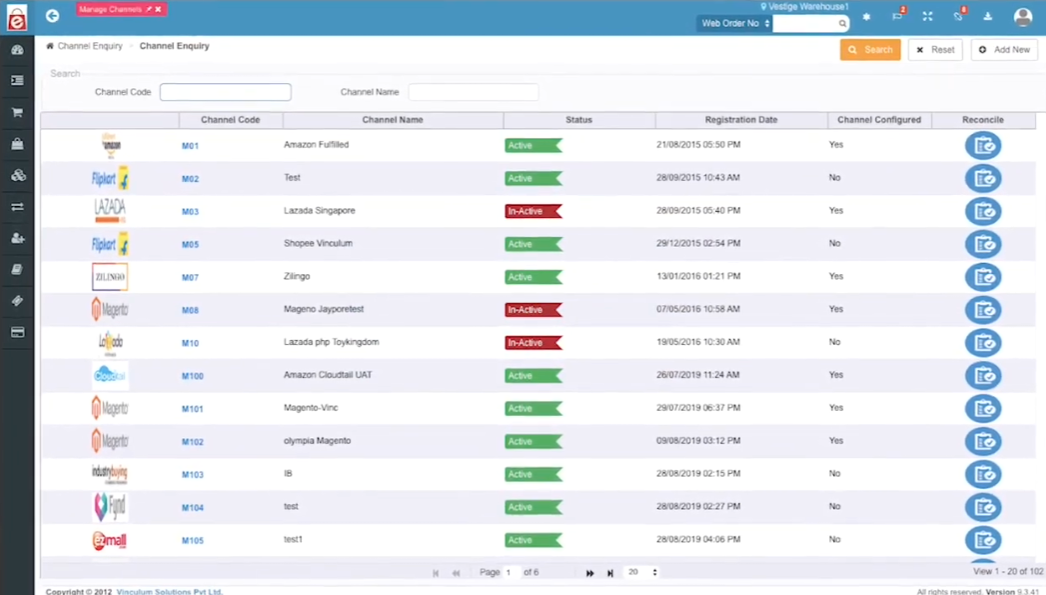
It probably has the most comprehensive real-time inventory visibility of any option on this list, and it surfaces that data for both vendors and customers. Quality control tools, barcode scanning, and RFID support round out the warehouse side. Integration covers the major web marketplaces alongside retail and manufacturing partners and ERPs.
Users consistently value the breadth of functionality, but the user interface has attracted some criticism; it gets the job done, even if it isn't the most polished experience on the market.
Final thoughts
Those are five solid options for eCommerce retailers looking for a WMS with real channel integration capability. The right choice will depend on the size of your operation, how many sales channels you're managing, and how much customisation you need.
If you want a structured way to compare them side by side, our free WMS comparison tool is a useful next step.

Free white paper
WMS vendor directory
Save hours of WMS vendor research with this free guide
Featured white papers

Related articles
-

Five of the best WMS for enterprise-level companies
Top enterprise level WMS systems that can handle complex operations spanning multiple warehouses
-

Mission-critical features of food lot traceability software
What features of food traceability software will help you during a food recall
-

What to include in your WMS RFP template
A comprehensive guide to WMS RFP templates, and what you should include in your final document.